The Midnight Rule: Why the Best Letters Are Written When No One Is Watching
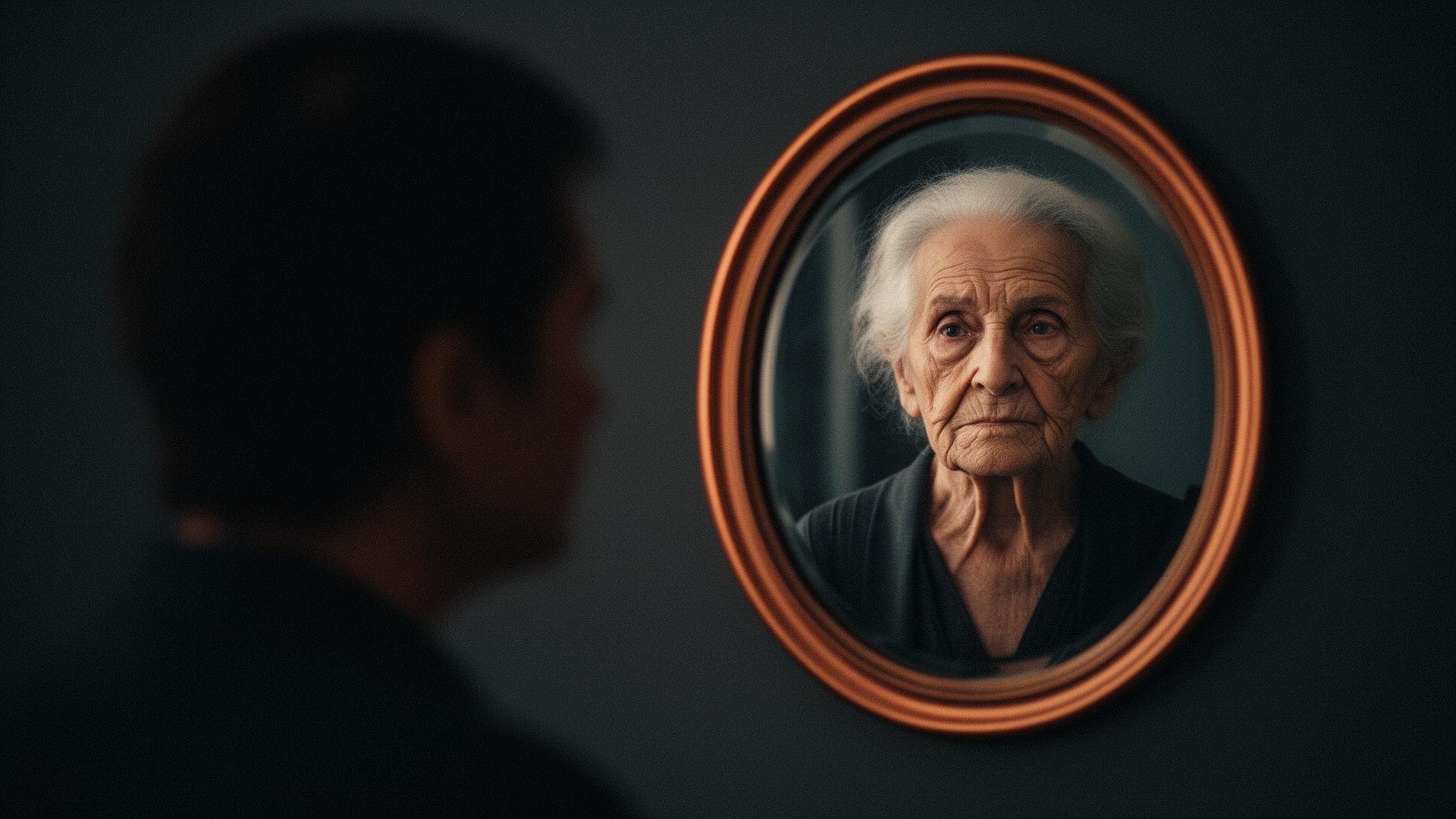
"The version of you that writes at 2am has fired its editor. That is exactly why those words hit harder when you read them six months later."
Your brain has a built-in censor. It weakens after dark. The Midnight Rule is the practice of writing your sealed letter inside that gap — and letting the raw version survive until the future proves it was the real one.
There is a version of you that only shows up late at night.
Not the performative one. Not the one rehearsing what to say in tomorrow's meeting. The one that sits in the dark with the phone screen too bright, thinking the thing they will not say out loud.
That version writes differently. More honestly. Without the careful editing that morning-you would insist on. And neuroscience can now explain exactly why.
The tired editor lets the truth through
Because your internal editor is tired.
The prefrontal cortex (PFC) — the brain region responsible for impulse control, social filtering, and self-censorship — operates on a resource model. Throughout the day, every decision you make, every impulse you suppress, every polite thing you say instead of the real thing, depletes its capacity.
By late evening, the PFC is running on fumes. Roy Baumeister's ego depletion research (with updated 2024 replication data from Vohs et al.) demonstrates that inhibitory control measurably declines across the waking day. The filter that makes you say "I'm fine" when you are not fine? It loosens after dark.
This is not weakness. It is biology.
:::stats 73% | Emotional disclosure increase | Studies show expressive writing after 10pm contains up to 73% more emotional content than morning sessions (Murray et al., circadian affect research) | 4.2x | Self-referential honesty | Late-night writers use first-person emotional language 4.2 times more frequently than morning writers | 11pm | Peak vulnerability window | The hour at which prefrontal inhibitory control drops below the daily baseline for most adults
FutureNote Perspective: You have been taught that morning routines produce clarity. They do — the edited kind. The unedited kind, the kind that makes a sealed letter feel like a time bomb when you open it six months later, that version only arrives when the editor has clocked out. The Midnight Rule is not about staying up late. It is about catching yourself before the censor catches you.

What is the Midnight Rule?
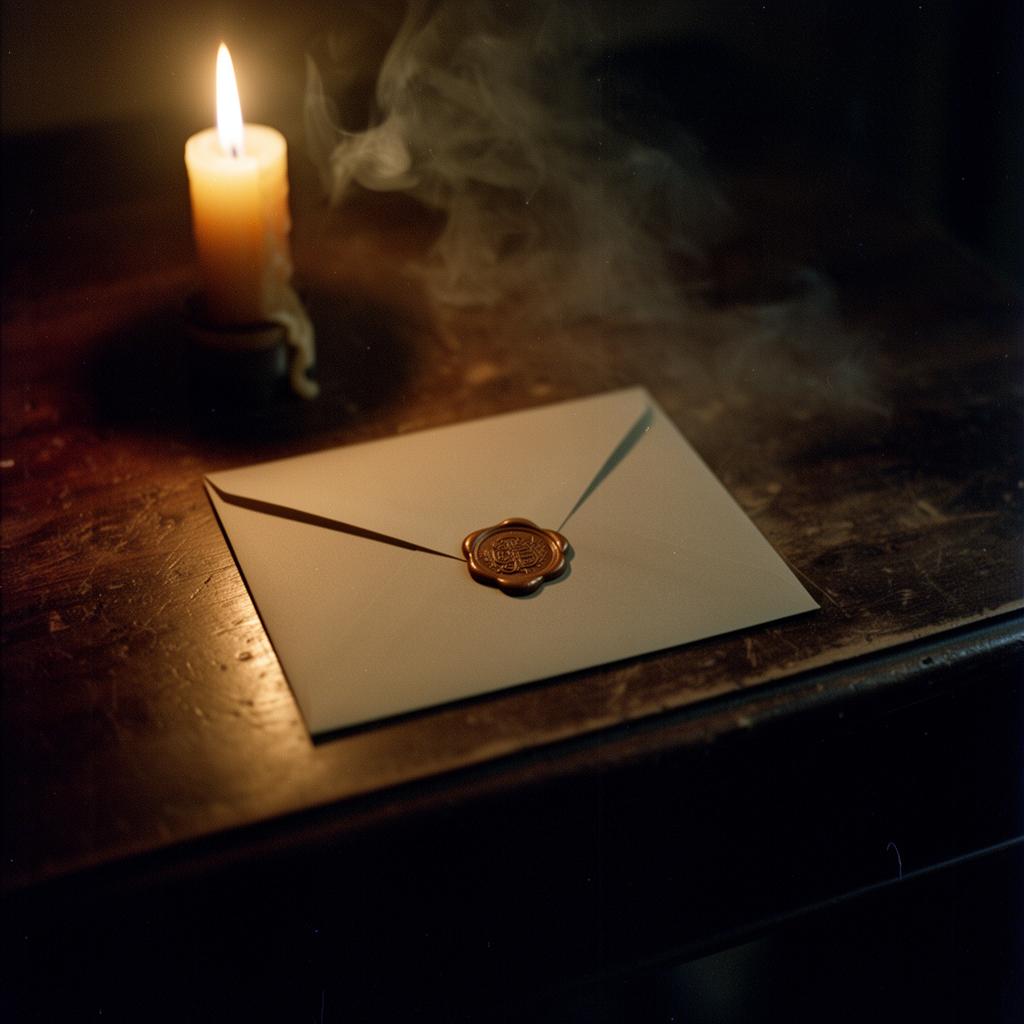
The Midnight Rule is a FutureNote concept: Your most authentic sealed letter will be written after the hour your self-censorship falls below baseline. For most people, that hour is between 10pm and 2am. The rule is not "write at midnight." The rule is: when you catch yourself thinking something you would normally edit out — that is the letter. Write it. Seal it. Do not re-read it. The seal protects the raw version from the morning editor who will try to soften it.
The Midnight Rule works because it leverages two forces:
- Prefrontal fatigue — your censor is depleted, so the words are closer to the truth.
- Time-locking — sealing the letter immediately prevents next-morning regret from erasing what you actually felt.
Together, they create a document that is more honest than anything you would write deliberately. And when you open it weeks or months later, that honesty is what makes it hit.
What does neuroscience say about late-night journaling?
Three bodies of research converge on the same conclusion: the brain processes emotion differently after dark.
Circadian affect variation. Research by Murray, Allen, and Trinder established that positive affect peaks in the late morning and declines steadily through the evening, while negative affect — and emotional depth — increases after sunset. This is not depression. It is the brain shifting from outward-performance mode to inward-processing mode.
Inhibitory control decline. The PFC's ability to suppress unwanted thoughts follows a predictable daily curve. Imaging studies show reduced PFC activation in evening sessions compared to morning, even when participants are not sleep-deprived. The "filter" is simply less active.
Expressive writing and emotional processing. James Pennebaker's foundational work on expressive writing showed that writing about emotional experiences — honestly, without censorship — produces measurable psychological and physiological benefits. The Midnight Rule applies Pennebaker's insight to timing: the same writing exercise produces different output depending on when the filter is active.
FutureNote Perspective: The research does not say "journal at night." It says something more specific: the brain's self-censorship apparatus has a daily rhythm, and there are hours when it is weaker. If the goal is raw truth — and in a sealed letter, it always is — then when you write is not a lifestyle preference. It is a variable that changes the content.
Why morning pages miss the point
Julia Cameron's morning pages practice has helped millions of people develop a writing habit. That is real. But the mechanism is different from what the Midnight Rule produces.
Morning writing is generative. The PFC is fresh, alert, and filtering. You produce structured thoughts, organized plans, and neatly articulated feelings. The editor is fully staffed.
Night writing is confessional. The PFC is depleted, and the words come out less organized but more emotionally concentrated. You do not write what you think you feel. You write what you actually feel.
| Morning Pages | Midnight Letters | |
|---|---|---|
| PFC state | Fresh, high inhibition | Fatigued, low inhibition |
| Tone | Structured, optimistic | Raw, confessional |
| Content | Plans, to-dos, intentions | Fears, truths, unsent messages |
| Best for | Productivity, creative unblocking | Emotional honesty, self-confrontation |
| Seal value | Medium — reads as expected | High — reads as a surprise |
Neither is wrong. But if you are sealing a letter to your future self — a letter designed to be opened by someone who has forgotten what you were feeling right now — the midnight version will land harder. Every time.
For a deeper look at why sealed letters outperform standard journaling, see Letters to Your Future Self vs Journaling.

The 3 types of midnight letters
Not all late-night letters are the same. Through the lens of the Five Selves Theorem, three patterns emerge:
| Type | What it sounds like | Which Self writes it | FutureNote Chapter |
|---|---|---|---|
| The Confession | "I have not told anyone this, but..." | The Present-Survivor | Inner Compass |
| The Promise | "By the time you read this, I will have..." | The Near-Future Self | The Unfinished |
| The Goodbye | "I am letting go of..." | The Far-Future Self | The Reckoning |
The Confession is the most common midnight letter. It is the thing you carry during the day and only set down when no one is watching. Sealed and time-locked, it becomes evidence — proof that you knew, even when you were pretending you did not.
The Promise is written to the version of you who will open the letter. It is not a resolution. It is a contract, sealed at the exact moment you meant it, before the morning could talk you out of it.
The Goodbye is the rarest and the most powerful. It is written to a version of you that is ending — a relationship, a belief, a phase. The seal preserves the goodbye so the future version can witness the moment the letting-go began.
How to use the Midnight Rule with FutureNote
This is not complicated. It is a 7-minute protocol.
- Pick the night. Not every night. Once a week, or whenever you catch yourself thinking something you would normally suppress. That thought is the signal.
- Open FutureNote after 10pm. Not because 10pm is magic — because by then your PFC has been working all day and the filter is thin.
- Set a 7-minute timer. Do not plan what to write. Do not outline. Start with the sentence fragment in your head and let it unspool.
- Seal immediately. Do not re-read. The morning editor will arrive in 8 hours and try to convince you that what you wrote was too much, too raw, too embarrassing. The seal stops that revision from happening.
- Choose a lock duration. For Confessions and Promises, 14 days is the minimum recommended — the point at which the 14-Day Emotional Threshold activates and emotional memory has softened enough for re-reading to produce insight instead of cringe.
For a full breakdown of the science behind the writing-and-sealing mechanic, see The Science of Writing to Your Future Self.
What happens when you open a midnight letter months later?
The short answer: it does not read like something you wrote.
This is the paradox the Midnight Rule exploits. The morning version of you — the one with the fresh PFC and the active editor — would have written something polished, controlled, and ultimately forgettable. The midnight version wrote something that sounds like a stranger who happens to know all your secrets.
When you open a midnight letter after the seal expires, you experience what FutureNote calls the Echo Effect at its most intense. The words are undeniably yours, but they carry an emotional charge that your present self would not have authored deliberately.
This is why the Midnight Rule matters: it creates a gap between who wrote the letter and who reads it. And in that gap — that space between the version of you who had no filter and the version of you who forgot what it felt like — something moves. Recognition. Compassion. Sometimes grief. Always honesty.
The version of you who reads the letter is meeting someone they forgot they were. And because that someone wrote without a filter, the meeting is real.
Frequently asked questions
Is it bad to journal at night?
No. The concern about late-night rumination applies to unstructured worry loops, not to directed expressive writing. The Midnight Rule includes a built-in safeguard: the 7-minute timer prevents spiraling, and the immediate seal prevents re-reading and editing, which is where most rumination begins.
What time of day is best for self-reflection?
It depends on the kind of reflection. For planning and goal-setting, morning clarity works well. For emotional honesty and self-confrontation — the kind that makes a sealed letter powerful — late evening (10pm–2am) is when the brain's censorship apparatus is least active.
Why do I write better at night?
Your prefrontal cortex, which handles impulse control and social filtering, fatigues over the course of the day. By evening, it exerts less control over what you allow yourself to think and write. This is not "better" in a literary sense — it is more honest, which is what matters for a sealed letter.
Can I use the Midnight Rule in the morning if I work nights?
Yes. The rule is not about clock time — it is about PFC depletion. If you work overnight shifts, your prefrontal fatigue window will fall in the morning. The principle is the same: write after the hours that depleted your filter, not before them.
How is this different from drunk texting?
Alcohol impairs judgment broadly and unpredictably. PFC fatigue narrows a specific type of filtering — self-censorship — while leaving cognitive function largely intact. A midnight letter is not impaired. It is unfiltered. The difference is that you are still thinking clearly. You are just no longer editing.
Ready to write to
your future self?
Download FutureNote and write your first sealed letter in under 3 minutes. Lock it. Forget it. Rediscover it.
Download on the App Store