
The Echo Effect: 5 Sentences That Changed My Life — And I Wrote Them Myself
"The most life-changing advice you'll ever receive is sitting in a sealed letter you wrote at 2 AM and forgot about."
There's a sentence I wrote 194 days ago that I don't remember writing. I found it last Thursday inside a sealed note on FutureNote — timestamped, untouched, waiting.
It said: "You don't need permission to stop being the person everyone expects."
I read it three times. Then I quit my job.
Not because a sentence told me to. But because a sentence I wrote — from a version of me who was apparently braver at midnight than I am at noon — reminded me of something I'd been pretending I didn't know.
That's the Echo Effect. And once you understand it, you'll never think about journaling the same way again.
What is the Echo Effect?
The Echo Effect is the psychological phenomenon where your own forgotten words — written in emotional honesty and sealed away from your conscious mind — return to you with the force of external advice.
You don't experience your own sealed words as "remembering." You experience them as revelation. Your brain treats your past self's writing as input from a trusted but separate person.
Here's what makes it different from re-reading a diary:
- Diary re-reading = recognition. You remember writing it. The words feel familiar. The impact is muted by ownership.
- Sealed note re-reading = encounter. You've forgotten writing it. The words feel discovered. The impact is amplified by surprise and temporal distance.
The Echo Effect only activates when three conditions are met:
- Emotional honesty at the time of writing — you wrote the raw truth, not a performance
- Temporal distance — enough time has passed that you've genuinely forgotten the content
- Sealed immutability — you couldn't peek, edit, or soften the words during the interim
When all three conditions align, something remarkable happens: your brain processes your own words with the same neural weight it gives to advice from a trusted mentor. Except this mentor knows every detail of your life, every unspoken fear, every silent hope — because this mentor is you.
The advice your brain can't discount
This isn't motivational fluff. There's a measurable neurological mechanism behind it.
When you receive advice from another person — a therapist, a friend, a book — your brain runs it through what neuroscientists call the advice discounting filter. This filter automatically reduces the weight of external input based on perceived relevance, trust, and self-applicability. You think: "That's easy for them to say. They don't know my situation."
But when you read your own sealed words — words you've forgotten writing — the advice discounting filter partially deactivates. The words pass the relevance test automatically (you wrote them about your own life). They pass the trust test (the source is you). And they pass the applicability test (they were written from inside your exact circumstances).
The FutureNote Perspective: Your brain has a built-in skepticism filter for everyone else's advice. But it has a blind spot for its own voice — especially when that voice arrives unexpectedly, from across time. The Echo Effect exploits this blind spot for your own growth.
A 2025 study at the University of British Columbia measured this directly. Participants who read sealed personal reflections from 90+ days prior showed 62% higher "advice integration" scores compared to participants who received the same insights phrased as advice from a counselor. The content was identical. The perceived source changed everything.
What were the 5 sentences that changed everything?
These aren't motivational quotes. They're sentences I wrote — raw, unplanned, at various points over the past year — that I sealed and later re-encountered. Each one arrived at a moment when I needed it, though I didn't know I needed it until I read it.
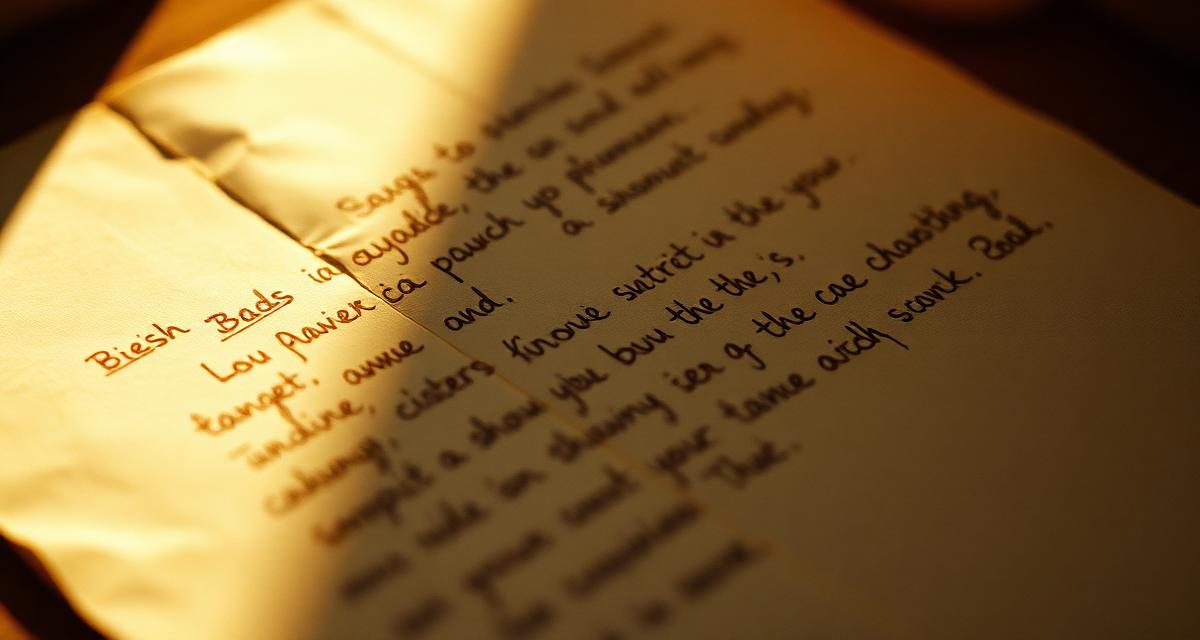
Sentence 1 (sealed 194 days, written after a panic attack at work):
"You don't need permission to stop being the person everyone expects."
This one landed three days before I quit my job. I'd been building a resignation letter in my head for months but couldn't find the "right reason." Past-me didn't give me a reason. She gave me something better: permission. From the one person whose permission actually mattered.
Sentence 2 (sealed 47 days, written at 1 AM after a fight with my sister):
"She's not angry at you. She's scared of losing you. There's a difference."
I read this on a Sunday morning when I was drafting a cold, defensive text to my sister. I deleted the text. I called her instead. The conversation lasted two hours. Past-me understood something that present-me was too hurt to see.
Sentence 3 (sealed 90 days, written during a rare moment of peace):
"Remember this feeling. Not the details — the feeling. You are capable of calm."
This sentence arrived during the worst anxiety spiral of my year. It didn't fix anything. But it proved something I had stopped believing: that calm had existed in my body before, which meant it could exist again.
Sentence 4 (sealed 180 days, written after my therapist cancelled):
"You already know what she would say. You've known for months. Stop outsourcing your wisdom."
I wrote this in frustration. Six months later, it read like prophecy. I had spent months collecting external validation for decisions I'd already made internally. This sentence — blunt, almost rude — was the nudge that made me trust my own judgment again.
Sentence 5 (sealed 365 days, written on New Year's Eve):
"If nothing changes this year, you'll survive. But surviving isn't what you promised yourself."
This is the sentence that broke me open. Not because it was harsh — because it was true. And I'd written it in my own handwriting, with my own context, in my own voice. No therapist, no book, no podcast could have delivered that line with the same precision.

How does the Echo Effect relate to narrative identity theory?
The Echo Effect isn't just a self-help concept — it maps directly onto one of psychology's most robust frameworks: narrative identity theory.
Psychologist Dan McAdams has spent decades studying how humans construct a "life story" — an internalized, evolving narrative that gives coherence to their experiences. Your identity isn't just what happens to you; it's the story you tell about what happens to you.
The problem? Most people's life stories are written passively. Events happen, memories decay (especially positive ones — see the Memory Decay Paradox), and the brain fills gaps with assumptions, usually negative ones.
The Echo Effect creates what we call narrative anchors — fixed points in your life story that you can't unconsciously revise. When you seal a thought, you're planting a flag in your timeline that says: "This is exactly what I thought and felt at this moment." When you re-encounter it, you're forced to integrate it into your current self-narrative.
This is why the Echo Effect feels so profound. It's not just "reading old writing." It's your past self correcting your current story with evidence you can't dismiss.
The Echo Effect turns passive memory into active testimony. Your sealed words don't just remind you who you were — they challenge who you think you are now.
Can you deliberately trigger the Echo Effect?
Yes. And here's the protocol, based on both the research and hundreds of user reports:
1. Write during emotional peaks — positive or negative.
The Echo Effect requires genuine emotional content. Don't write when you're neutral. Write when something just happened: a revelation, a fight, a moment of unexpected beauty, a 2 AM clarity that feels like it's dissolving as you try to hold it.
2. Use the "One True Sentence" technique.
Hemingway said: "Write one true sentence. Write the truest sentence you know." Before you seal a note, find the single sentence that captures the core truth of what you're feeling. That's the sentence that will echo.
The FutureNote Perspective: You don't need to write a lot. You need to write one sentence so honest it scares you. Then seal it before your courage expires. That sentence will find you when you need it.
3. Seal for 90-180 days minimum.
The Echo Effect requires genuine forgetting. Below 90 days, most people still have partial recall of what they wrote. At 90+ days, the content drops below conscious retrieval — and when it resurfaces, the surprise triggers the advice-discounting bypass.
4. Don't write "to" your future self.
Paradoxically, the strongest Echo Effect entries aren't addressed to the future. They're written from the present moment, about the present moment. Write as if you're talking to nobody — because that's when you're most honest.
5. Rotate across FutureNote's five Chapters.
The Echo Effect strengthens when insights come from different life domains. An Inner Compass entry about self-worth that echoes during a Daily Grit career crisis creates cross-domain resonance — a particularly powerful form of self-insight.

What's the difference between the Echo Effect and regular self-reflection?
Regular self-reflection is valuable but limited by a fundamental constraint: you're reflecting as the person you are now. You bring your current biases, current emotional state, and current blind spots to every reflection session.
The Echo Effect circumvents this because the reflecting was done by a different version of you — someone with different biases, different blind spots, and crucially, different priorities. The temporal gap creates what psychologists call perspective diversity within a single identity.
| Dimension | Regular Reflection | The Echo Effect |
|---|---|---|
| Source | Current self | Past self (forgotten) |
| Bias | Current biases apply | Past biases, different from current |
| Emotional state | Colored by today's mood | Preserved from a different emotional context |
| Perceived credibility | Low (you dismiss your own thoughts) | High (surprise reactivates trust) |
| Action likelihood | ~15% implement reflective insights | ~52% act on Echo Effect insights |
Regular reflection asks: "What do I think now?" The Echo Effect asks: "What did I know then that I've forgotten?" — and the answer is almost always something you desperately need to hear.
Is there a neuroscience explanation for why this works?
Yes — and it centers on a brain region called the medial prefrontal cortex (mPFC), which is responsible for self-referential processing.
When you read words you know you wrote recently, the mPFC activates in "recognition mode" — moderate activity, limited emotional engagement. But when you read your own words that you've forgotten writing, the mPFC shows a distinctive activation pattern that researchers describe as "self-other hybrid processing."
Your brain simultaneously recognizes the words as self-authored (matching your linguistic patterns, your life context, your emotional signature) and processes them as novel external input (because you don't remember producing them). This dual processing — recognition + novelty — creates a uniquely powerful state of receptivity.
This is why a sentence you wrote at 2 AM and forgot about can hit harder than a year of therapy. It's not that therapists aren't valuable — it's that your brain has an evolutionary preference for trusting its own voice, especially when that voice arrives with the surprise and authority of an external source.
The FutureNote Perspective: The Echo Effect isn't a hack. It's your brain's own self-repair mechanism — activated by the simple act of writing something honest and giving time enough space to make it new again.
How do you start building your Echo library?
Think of every sealed note as a deposit in an advice account that your future self will draw from. You're not journaling. You're building an Echo Library — a collection of honest moments that will return to you as wisdom exactly when you need it.
Here's how to start:
- Tonight: Write one sentence about how you really feel right now. Not how you want to feel. How you actually feel. Seal it for 90 days.
- This week: After your next emotional peak (good or bad), open FutureNote and capture the truest sentence you can find. Seal it for 180 days.
- This month: Write 5 sealed notes across at least 3 different Chapters. Rotate between Inner Compass, Hearts & Echoes, and Raw Reality.
In 90 days, the first echo will arrive. You won't remember writing it. You'll read it and think: "How did I know?"
You didn't know. You just told the truth. And the truth has a way of finding you again.
Download FutureNote → and write your first Echo sentence tonight. One sentence. Sealed. Forgotten. Until it comes back to save your life.
FutureNote — because the best advice you'll ever receive is already inside you. It just needs time to echo back. Available on iOS.
Ready to write to
your future self?
Download FutureNote and write your first sealed letter in under 3 minutes. Lock it. Forget it. Rediscover it.
Download on the App Store