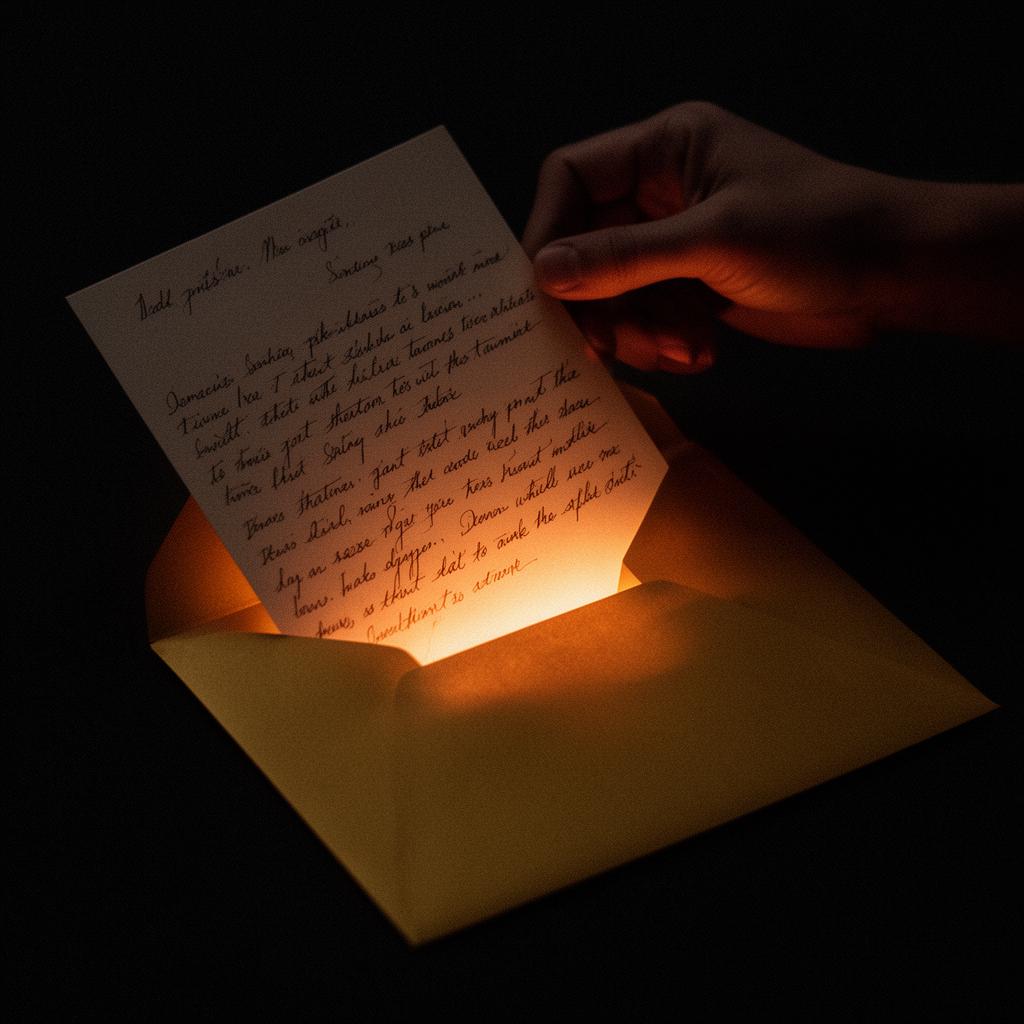
Future Me vs Future Note: The Honest 2026 Comparison (From Someone Who Built One of Them)
"Future Me delivers a letter. Future Note starts a conversation. That single difference decides which one belongs on your phone."
Last updated: July 2026. Written by Markas G., founder of FutureNote. I've used FutureMe.org for years before building this app. I'll be as fair as I can — then honest about where the two things actually diverge.
If you searched Future Me vs Future Note, you're standing at a small, quiet fork. Both apps promise the same thing on the surface: write to your future self, read it later, feel something. But under the hood they are almost opposite products — one built around a scheduled email, the other around an ongoing, sealed conversation between the versions of you.
This is the honest guide. I'll show you what each app actually does, where it wins, where it doesn't, and how to pick.
TL;DR — the one-paragraph verdict. Use FutureMe.org if you want a free, web-based way to send yourself a one-off email in the future, and don't mind that the letter arrives, is read once, and is done. Use FutureNote if you want an iOS ritual — sealed notes, a life timeline, chapters, and the ability to reply to the version of yourself who wrote the note. FutureMe is a mailbox. FutureNote is a relationship.
What is FutureMe?
FutureMe.org is the original letter-to-your-future-self service, launched in 2002. You visit the website, type a letter, pick a date (up to decades in the future), and FutureMe emails it back to you when the day arrives. It's free for basic use, has a paid tier, and a large archive of public letters written anonymously by strangers.
It's an internet institution. Millions of letters have been sent through it. For a huge number of people it was the first time they thought seriously about the person they'd be in five years.
What is Future Note?
FutureNote is an iOS app for sealing notes to your future self and — this is the part no one else does — replying to your past self when a note comes back. Every reply unlocks the next note. Over months, the app builds a personal timeline: a scrollable record of who you were, what you were carrying, and how you answered yourself later.
It's structured around five life chapters (Inner Compass, Hearts & Echoes, Raw Reality, Becoming, The Daily Grit) or a blank chapter you name yourself. One sealed note per day, no more. Immutable once sealed. iOS only.
Future Me vs Future Note at a glance
| **FutureMe.org** | **FutureNote** | |
|---|---|---|
| Core metaphor | Scheduled email to future you | Sealed notes + a conversation across time |
| Delivery | Email to your inbox | Push notification, opened in-app |
| Reply to past self | ❌ No | ✅ Yes — every unlock invites a reply |
| Timeline of your notes | Archive list | Scrollable life timeline, by chapter |
| Chapters / structure | Freeform | 5 chapters + custom |
| Note cap | Unlimited | One sealed note per day (intentional) |
| Editable after sealing | Edit until send date on paid tier | Immutable once sealed |
| Public letters | Yes, optional | ❌ Never — private by design |
| Platform | Web (any device) | iOS native |
| Offline writing | ❌ | ✅ |
| Pricing | Free tier + FutureMe Plus subscription | Free trial, then paid |
| Age | Since 2002 | New generation, 2025+ |
| Best for | Casual one-off letters, occasional milestones | A daily ritual, ongoing self-reflection, memory preservation |
How does FutureMe actually work?
Short answer: You write a letter on a webpage, pick a future date, and FutureMe emails it to the address you entered. It's simple, free, and old enough to be trusted.
FutureMe's flow has barely changed in twenty years, and that's part of its charm. You open the site, type into a big text box, pick a date (30 days, one year, three years, ten), decide if the letter is private, anonymous-public, or public with your name, and hit send. Done.
What FutureMe does well
- Zero friction. No app install, no account required for a single letter.
- The public archive. Reading anonymous letters written by strangers is a strangely powerful experience. It's the closest thing the internet has to a communal time capsule.
- Longevity. Fifteen-plus years of continuous operation is a real trust signal for a service whose entire promise is "we'll still be here in a decade."
- Universal reach. Web-based, works on any device, any OS.
Where FutureMe shows its age
- Email is a fragile time capsule. Inbox providers change, spam filters get aggressive, addresses die. A meaningful letter can quietly land in Promotions ten years from now.
- Write and forget. There's no ongoing structure. Once the letter is sent, the ritual ends. You may not write another for a year.
- No reply. When the letter arrives, the interaction is one-directional. You read it. That's the whole thing.
- No sense of arc. Twenty letters over five years feel like twenty disconnected emails, not a story about who you are becoming.
None of this makes FutureMe bad. It makes it a mail service, not a practice.
How does Future Note actually work?
Short answer: You write a private note, seal it for a duration you choose, and receive it back inside the app. When it returns, you can reply to the version of yourself who wrote it. Each unlock opens the next chapter.
The FutureNote flow is deliberately quiet. Open the app. Pick a chapter — the one you're actually in. Write for as long as you need. Choose a duration: 14 days, 30 days, six months, a year. Seal the note. The seal is final; nothing about it can be edited afterwards. The note lives inside your life timeline — a chronological, visual record of what you've written.
When the seal breaks, you get a notification. You open the app and meet the person you were. And then — here's the part that changes everything — you can write back to them. That reply becomes the next sealed note, timed to unlock again. The loop keeps going.
What FutureNote does well
- The reply loop. Turns a time capsule into a conversation. This mechanic exists nowhere else.
- Chapters. Life doesn't happen in flat chronology — it happens in seasons. Chapters give structure without imposing meaning.
- Sealed immutability. You cannot edit a sealed note. That's the point. The raw truth is preserved, uncomfortable or not — see our piece on expressive writing and why sealed letters beat open journaling.
- Timeline visualisation. Scrolling backward through your own notes is genuinely powerful. It's the closest a phone gets to time travel.
- Daily cap of one. Prevents journaling burnout. See the piece on the 14-day emotional threshold for why the constraint matters.
- Private by design. Notes are never public. There's no social feed to game.
Where FutureNote has limits
- iOS only (for now). If you're on Android or web-only, FutureMe wins by default.
- Newer. FutureMe has a twenty-year continuity record. FutureNote is early.
- Opinionated. The one-note-per-day cap and immutable sealing aren't for everyone. Some people want to fire off ten quick letters at midnight and edit them tomorrow. FutureMe is better for that.
The core philosophical difference: mailbox or conversation?
This is the paragraph most comparison articles miss.
FutureMe treats the future self as an address. You write, the system delivers, the future self receives. It's transactional and one-directional. Elegant, but finite.
FutureNote treats the future self as a correspondent. Every unlocked note is an invitation to answer. Over a year you don't accumulate letters — you accumulate a dialogue with the versions of you who wrote them. This maps directly to what the psychological literature calls future-self continuity (Hershfield et al.) — the strength of the felt connection between present-you and future-you. Higher continuity predicts better long-term decisions: more saving, more follow-through, fewer identity ruptures.
You cannot build continuity from a single delivered letter. You build it from the loop — writing, meeting yourself, answering, and doing it again. That's what FutureNote calls The Reply Loop, and it's the reason the two apps aren't really the same category of product.
FutureNote Perspective: The single most useful question we added to FutureNote wasn't a feature. It was a question: "What would you say back to the person who wrote this?" Everything else — the seal, the chapter, the timeline — is scaffolding around that one question.
Feature-by-feature deep dive
Writing experience
FutureMe is a plain textarea on a web page. Fast, unfussy, works everywhere.
FutureNote is a focused, full-screen writing surface with warm typography (Cormorant Garamond and Jost), gentle haptics, and a sealing animation when you finish. On paper the difference is cosmetic. In practice it changes how slowly and honestly you write. A textarea invites a quick note; a ritual surface invites the actual truth.
Sealing and delivery
FutureMe: emailed to the address you entered on the send date.
FutureNote: sealed in-app, delivered as a push notification, opened inside the app. The note is stored server-side and cannot be accessed until the unlock date — not even by you. If you switch phones, your timeline follows.
Replying to your past self
FutureMe: not supported.
FutureNote: the defining feature. When a note unlocks, tapping Reply opens a new sealed note pre-linked to the original. Over months this forms a thread you can scroll — a legible record of "what I was carrying and what I told myself later."
Timeline and chapters
FutureMe gives you an archive: a list of past letters you can view on the website.
FutureNote gives you a timeline: notes arranged chronologically inside chapters like Inner Compass, Hearts & Echoes, Raw Reality, Becoming, and The Daily Grit, or a chapter you name yourself. Scrolling it is the app's most-used surface after writing.
Editing and immutability
FutureMe: on the free tier, the letter is locked once sent. On FutureMe Plus, you can edit until the delivery date.
FutureNote: immutable once sealed. Always. This is a design choice, not a limitation. The whole point of a sealed letter is that future-you gets the raw, unedited version of who you were.
Notifications
FutureMe: email arrives on delivery day. That's it.
FutureNote: gentle push when a note is ready to unlock; optional daily writing reminder; nothing else. No streaks, no social prompts, no engagement bait.

Privacy and data ownership
Both services keep private letters private. FutureMe has an optional public archive; FutureNote has none — no letter is ever public, ever, by design.
FutureNote stores content encrypted at rest on modern cloud infrastructure. FutureMe delivers via email, meaning the content also lives in your inbox provider's system (Gmail, Outlook, iCloud). That's a factor if you care where your writing eventually rests.
Platform, offline, and reach
FutureMe wins on reach — web, any device, any OS.
FutureNote wins on depth — native iOS, offline writing, haptics, notifications, background sync, Face ID lock on entry.
If you're not on iOS, this comparison is short: use FutureMe.
Design and feel
FutureMe: clean, plain, functional. It looks like a website that's been trustworthy for two decades.
FutureNote: warm, tactile, editorial. Cream, terracotta, quiet typography. The kind of app you're willing to open in the evening.
Future Me vs Future Note pricing
| **FutureMe.org** | **FutureNote** | |
|---|---|---|
| Free tier | Yes — send letters, use the site, read public letters | Free trial, limited chapters |
| Paid tier | FutureMe Plus (annual subscription) — edit-until-send, letter management, extras | Subscription — full chapters, unlimited timeline, all durations |
| One-off letters | Free forever on basic tier | Included in trial; ongoing use requires subscription |
| Family / gift plans | Not a headline feature | Not a headline feature |
Pricing on both apps changes over time. Check each service's current page before you commit.
What it actually feels like to use each app
A spec sheet is half the story. Here's the other half — the texture.
FutureMe at 11 p.m. on a Tuesday. You're cleaning your apartment, half-watching something, and you remember the site from a Hacker News thread. You open the laptop, write a paragraph to yourself in 2029, pick a date, hit send. The page says "we'll deliver this on March 14, 2029." You close the laptop. You may not think about it again until the morning of March 14, 2029, when a stranger's letter from your past self lands in your inbox.
FutureNote at 11 p.m. on a Tuesday. You open the app. Tonight's chapter is Raw Reality. You write for seven minutes — slow, specific, slightly uncomfortable. You seal the note for 90 days. The seal animation plays. You put the phone down. In 90 days, you'll be reading your own handwriting — and you'll have the option to answer it. That answer becomes the next sealed note. The loop starts.
The first feels like sending a postcard to a stranger. The second feels like starting a correspondence with the version of you who needed it most.
Who should choose Future Me?
Choose FutureMe if:
- You just want to send yourself one letter, or a few, and don't want to install anything.
- You're on Android, ChromeOS, or a computer only.
- You love the idea of the public letters archive.
- You want the reassurance of a service that's been running for two decades.
- You don't need structure — you're not looking for a practice, just a message in a bottle.
There is nothing wrong with wanting exactly this. FutureMe is one of the internet's most quietly meaningful services.
Who should choose Future Note?
Choose FutureNote if:
- You want a ritual, not a one-off — a note today, another next week, a timeline in a year.
- You want to reply to your past self and see the conversation build.
- You're on iOS.
- You want chapters — a way to see your life divided into seasons rather than a flat email chain.
- You take privacy seriously and don't want any public feed adjacent to your writing.
- You resonate with the philosophy that the person you were deserves an answer, not just a re-reading.
If your first reaction to the phrase "reply to your past self" was a quiet "oh" — FutureNote is the one.
Common misconceptions
"Isn't this just a scheduled email?" For FutureMe, largely yes. For FutureNote, no — sealed storage, in-app delivery, replies, and a timeline are things email can't replicate.
"Can't I just write in Apple Notes and set a reminder?" You can. You won't. The reason people use FutureMe or FutureNote is that the sealing is a distinct psychological act. Apple Notes doesn't seal anything.
"Is FutureNote a journaling app?" Not really. Journals are open-ended and revisited. FutureNote is sealed and immutable — closer to letters than diary entries. See letters vs journaling.
"Is Future Me still active?" Yes. It's been continuously operated since 2002.
"Will my Future Note letters be readable in ten years?" They live in the app's timeline and are portable across your iCloud-linked devices. Unlike email, they aren't at the mercy of an inbox provider decades from now.
FutureNote Perspective: If you've already written a letter to yourself on FutureMe and felt that small, private glow when it arrived — that glow is the entire reason FutureNote exists. We just asked: what if that feeling could be the start of something instead of the end?
If you're already using FutureMe
If you've sent a few letters through FutureMe and felt the quiet arrival — congratulations, you already know this practice works. The question FutureNote is asking is whether you want the next step: a daily ritual that turns that one-off glow into a long, structured relationship with the versions of you.
You don't have to stop using FutureMe. It remains excellent at what it does. FutureNote just offers a different surface — a sealed timeline you scroll, a chapter structure that gives shape, and the reply loop that turns a mailbox into a correspondence.
What both apps get right
Both FutureMe and FutureNote take one idea seriously that most productivity apps miss: your future self is a real person, and writing to them changes how you live now. Twenty years of research from Hershfield, Pennebaker, and the temporal-landmarks literature backs this up. The industry has finally caught up with what a poet could have told you: the act of naming yourself in a letter you can't take back is one of the most concentrated forms of self-honesty available to a person with a phone.
If either app gets you writing to yourself, it's a win. The choice between them is about how you want that relationship to unfold — as a single letter that arrives, or as a conversation that builds.
Final verdict: Future Me vs Future Note
FutureMe is the elegant, free, universal way to send yourself a letter. It's been trustworthy for two decades and it will keep being trustworthy. If that's all you want, use it — with my genuine blessing.
FutureNote is a different category of product. It's not competing with FutureMe for the "send an email" use case; it's building the thing FutureMe never tried to be — a sealed, iOS-native conversation between the versions of you, told across chapters, replied to, remembered. If your search for a future-self app was really a search for a small daily practice that turns memory into meaning, FutureNote is the answer.
Two good products. Two different lives. Pick the one that matches yours.
Try this tonight
If you're stuck between the two, here's the simplest decision rule:
- You have ten minutes and a browser open: send yourself one letter on FutureMe. Pick a date six months out. See how it feels when it arrives.
- You have a phone in your hand and a quiet hour: write your first sealed note in FutureNote. Pick the chapter you're actually in. Choose 30 days. Don't reread what you wrote. Seal it.
Either way, you win. The hardest part is the first sentence.
Download FutureNote on the App Store →
FAQ: Future Me vs Future Note
Is Future Note better than Future Me?
Better at different things. FutureMe is better for a free one-off letter on any device. FutureNote is better for an ongoing iOS ritual with a reply-to-past-self mechanic and a scrollable life timeline.
Is FutureNote a FutureMe.org alternative?
Yes, but not a clone. FutureNote replaces the "email to future self" model with sealed in-app notes, chapters, and an ongoing reply loop. Same intent, different product.
Can I reply to a letter from my past self on FutureMe?
No. FutureMe delivers a one-directional email. Replying to your past self is FutureNote's defining feature.
Is Future Note available on Android?
Not yet. FutureNote is currently iOS-only. If you're on Android, FutureMe is the sensible choice for now.
Is FutureMe still free?
Yes. FutureMe has a free tier plus an optional paid plan (FutureMe Plus) with editing and management features.
Can I edit a sealed note in FutureNote?
No. Sealing is immutable. That's a deliberate design choice — the whole value of a sealed letter is that it captures who you were, unedited.
How long can I seal a note for?
FutureNote supports durations from 14 days up to a year. FutureMe supports arbitrary future dates, including decades ahead.
Are FutureNote letters private?
Yes — always. FutureNote has no public feed. Every note is private by design.
What's the best app to write letters to your future self in 2026?
FutureMe if you want a free, universal, no-install letter. FutureNote if you want a private iOS practice with chapters, a timeline, and the reply loop.
Does writing to your future self actually work?
The research says yes. Future-self continuity (Hershfield), expressive writing (Pennebaker), and temporal-landmark effects all show measurable benefits. See our science overview.
Related reading
FutureNote — seal your truth. Meet yourself later. Available on iOS.
Ready to write to
your future self?
Download FutureNote and write your first sealed letter in under 3 minutes. Lock it. Forget it. Rediscover it.
Download on the App Store