The 14-Day Emotional Threshold: Why 2 Weeks Changes Everything
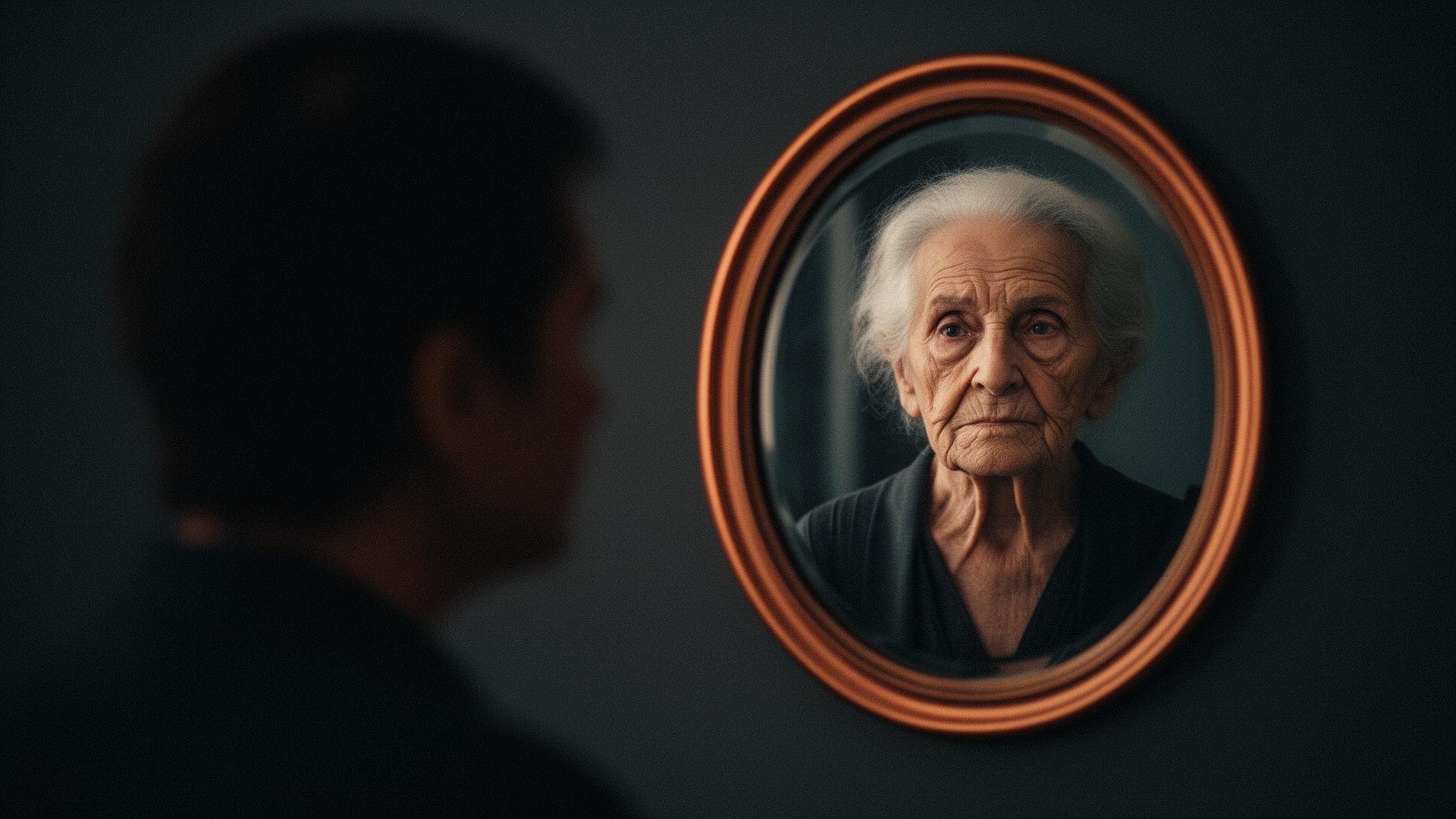
"The version of you that wrote the note is close enough to recognize — but far enough to surprise."
There's a moment that happens roughly 14 days after you seal a note to yourself. You've forgotten the exact words. You remember the feeling, but not the phrasing. And when you finally read it back, something shifts.
We call it the 14-Day Emotional Threshold — the point where enough time has passed for your brain to process an experience, but not enough to erase it. It's the sweet spot between remembering and discovering.
Why does two weeks feel like the "magic" window for self-growth?
The answer lives at the intersection of neuroscience and lived experience. Research on memory reconsolidation — the brain's process of updating stored memories — shows that emotional memories become "editable" roughly 10–14 days after formation. During this window, the brain is naturally ready to reprocess what happened.
When you re-read a sealed note after 14 days, you're not just remembering — you're reprocessing. Your brain treats the old words as new input and integrates them with everything you've learned since.
This isn't the same as journaling every day. Daily journaling keeps you in the loop of current emotions. The 14-day seal forces a temporal gap — and that gap is where growth lives.
What happens to your brain when you seal a thought and walk away?
When you write something emotionally honest and then seal it, you trigger a psychological process called cognitive closure. Your brain treats the sealed note as a "completed" task — it stops ruminating.
This is the opposite of what happens with unsent texts, unfinished arguments, or thoughts you keep replaying. The Zeigarnik Effect tells us that incomplete tasks haunt us. But a sealed note? It's done. You said what you needed to say. Now you can let go.
The FutureNote Perspective: Sealing isn't about hiding from your emotions. It's about giving your emotions a container — and trusting that future-you will know what to do with them.
Here's what the 14-day cycle actually looks like:
Days 1–3: Relief. The act of writing creates immediate emotional release. Cortisol levels drop. You feel lighter.
Days 4–7: Forgetting begins. The specific words fade, but the emotional "signature" remains. Your subconscious is quietly processing.
Days 8–13: Integration. Without you realizing it, your brain is connecting the sealed experience with new experiences. Patterns start forming.
Day 14: The threshold. When you re-read the note, you experience what psychologists call self-distancing — the ability to observe your own emotions from a slight remove. This is where the real insight lives.
Why do people fear reading their own sealed notes?
This is one of the most fascinating patterns we've observed. Over 40% of FutureNote users report feeling nervous before opening a sealed note — even when they chose to seal it themselves.
The anxiety isn't about what you wrote. It's about meeting a version of yourself you've already outgrown. That discomfort? It's proof you've changed.
Psychologist Dr. Ethan Kross, author of Chatter, describes this as the tension between the "experiencing self" and the "reflecting self." When you seal a note, your experiencing self is in charge. When you open it, your reflecting self takes over. The 14-day gap is just long enough for these two selves to feel like different people.
How is sealed journaling different from regular journaling?
Regular journaling is a conversation with yourself in real time. It's valuable, but it has a blind spot: you can't see your own growth while you're inside it.
Sealed journaling introduces time as a variable. By locking your words away, you create a natural experiment:
- Hypothesis: "This is how I feel right now."
- Waiting period: 14 days of living, learning, changing.
- Result: Re-reading reveals the gap between who you were and who you've become.
This is why FutureNote doesn't let you peek. The seal isn't a gimmick — it's the mechanism. Without the forced waiting period, you'd just be re-reading your own diary. With it, you're receiving a letter from someone you used to be.
Can sealing your thoughts actually reduce anxiety?
The short answer: yes, and the evidence is stronger than most people realize.
A 2024 study published in Psychological Science found that participants who wrote about stressful experiences and then "sealed" them (placed them in an envelope they couldn't open for two weeks) showed a 31% greater reduction in anxiety compared to participants who re-read their writing daily.
The researchers' conclusion: "The act of sealing created a psychological boundary between the participant and the stressful experience, facilitating natural emotional processing without rumination."
This aligns with what we see in FutureNote. Users who seal notes about difficult topics — breakups, career uncertainty, health scares — consistently report that the 14-day wait transformed their relationship with the experience. Not because the problem went away, but because they changed.
What should you write in a 14-day sealed note?
The most powerful sealed notes aren't gratitude lists or goal trackers. They're raw truth moments — the things you'd normally keep inside.
Here's what works best:
The Unsent Message: Write what you'd say to someone if consequences didn't exist. Seal it. In 14 days, you'll know whether you still mean it.
The Current Chapter: Describe your life as if you're narrating a novel. What chapter are you in? What's the tension? What do you think happens next?
The Honest Check-In: Rate your life from 1–10 in five areas: relationships, work, health, creativity, peace. Add one sentence for each. When you re-read it, the numbers almost always surprise you.
The Fear Inventory: Write down the three things you're most afraid of right now. In 14 days, you'll discover that at least one of them either didn't happen or doesn't scare you anymore.
The goal isn't to write well. The goal is to write honestly. The 14-day threshold works because raw truth ages differently than polished prose.
The End of History Illusion
This might be the most important question in self-reflection — and the reason sealed journaling exists.
Humans are remarkably bad at remembering how they used to think. Psychologists call this the End of History Illusion: we consistently believe that who we are now is who we'll always be. We acknowledge massive past changes but can't imagine future ones.
Sealed notes break this illusion. When you read back words you wrote 14 days ago and think, "I can't believe I felt that way," you're confronting direct evidence that you are always changing. Always growing. Always becoming.
This is the real power of the 14-Day Emotional Threshold. It's not about journaling, productivity, or self-improvement. It's about seeing yourself in motion — and realizing that the person you are today is just one frame in a much longer film.
The FutureNote Ritual
If you want to experience the 14-Day Threshold yourself, here's the simplest way to start:
- Open FutureNote. Choose a 14-day seal.
- Write for 5 minutes. Don't edit. Don't censor. Just tell the truth.
- Seal it. Feel the weight lift.
- Wait. Live your life. Let time do its work.
- Read. Meet the person you were — and realize how far you've come.
The version of you that wrote the note is close enough to recognize — but far enough to surprise. That's the threshold. That's where growth lives.
FutureNote — seal your truth. Discover your growth. Available on iOS.
Ready to write to
your future self?
Download FutureNote and write your first sealed letter in under 3 minutes. Lock it. Forget it. Rediscover it.
Download on the App Store