I Opened a Letter I Wrote to Myself 365 Days Ago. Here's What Broke Me.
"The person who wrote that letter was drowning. And she still took the time to throw a life raft forward in time — to me."
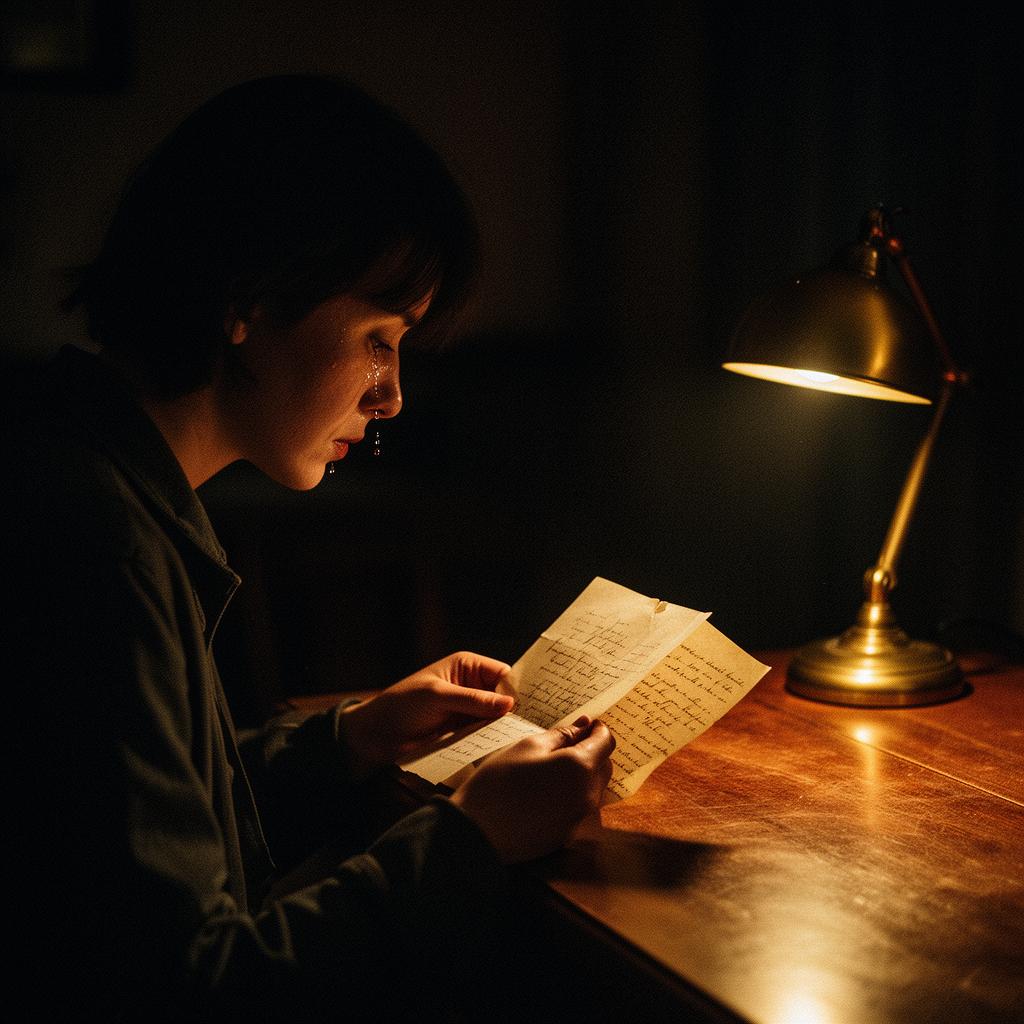
It was a Tuesday. 11:47 PM. I know this because I checked the timestamp three times, the way you check a wound to see if it's still bleeding.
I was sitting on the floor of my apartment — the one with the radiator that clanked like a trapped animal — and I had just finished crying for the second time that day. Not the performative kind you do when you want someone to notice. The kind where your body just... leaks. Silently. Without your permission.
That was the night I wrote the letter.
Why did I write a letter to my future self on the worst night of my life?
I didn't plan to. I'd downloaded FutureNote three weeks earlier during a doom-scroll at 2 AM. Some article about "writing to your future self" had made me roll my eyes hard enough to pull a muscle. But I'd downloaded it anyway, the way you keep a self-help book on your nightstand without ever opening it — just in case you become the kind of person who reads self-help books.
That Tuesday night, after the second cry, I opened the app instead of Twitter. I don't know why. Maybe because Twitter would have shown me other people's curated happiness and I couldn't stomach it. Maybe because I needed to talk to someone who wouldn't judge me, and the only person who qualified was a version of me who didn't exist yet.
I didn't write to my future self because I was hopeful. I wrote because I had nowhere else to put the truth.
I chose 365 days. One full year. I remember thinking: "In a year, I'll either be better or I won't exist in the same way. Either way, this letter won't hurt."
I was wrong about that.
What did I actually write in the letter?
I'm not going to share the whole thing. Some of it is too raw, even now. But I'll tell you the bones of it.
I wrote about the breakup. Not the dramatic, movie-scene version — the real one. The part where you realize you've been performing "fine" for so long that when someone finally leaves, you don't even know which version of you they're leaving. I wrote about the job I hated but couldn't quit because my self-worth was duct-taped to my salary. I wrote about how I'd stopped calling my mom because hearing her voice made me feel like a child, and I was trying so hard to feel like an adult.
I wrote about the kitchen. How I'd stopped cooking and was eating cereal for dinner most nights. How the spice rack my ex had bought was still on the counter and I couldn't bring myself to move it or use it.
And then — this is the part that wrecked me a year later — I wrote this:
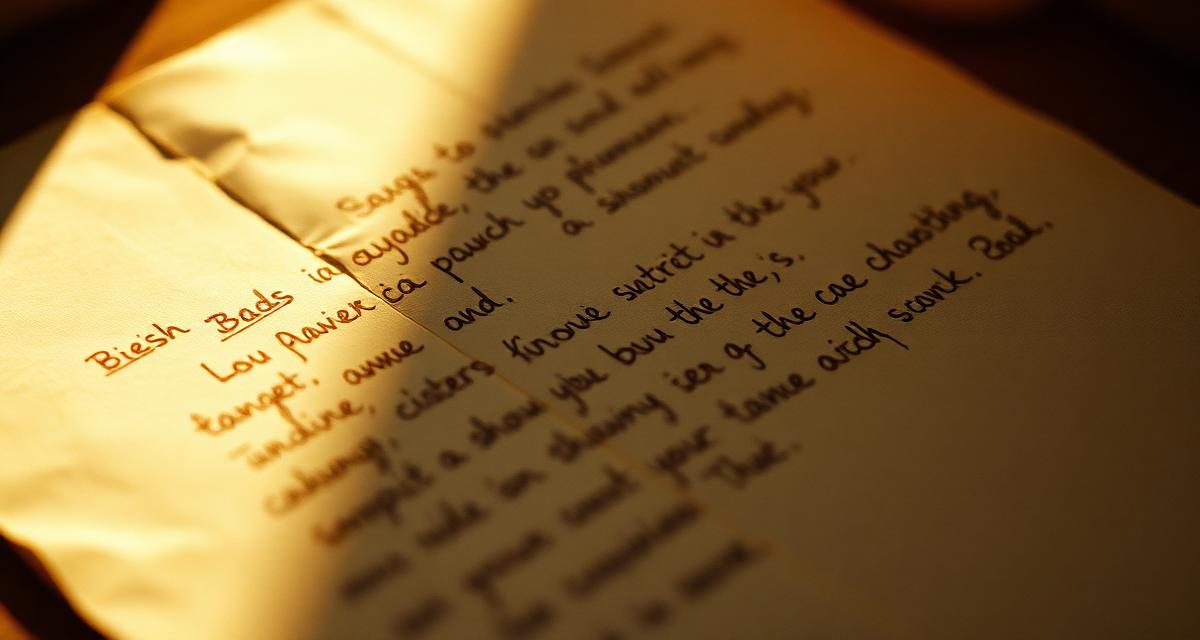
"Future me: I hope you're eating real food. I hope you moved the spice rack. I hope you called Mom. I hope the radiator doesn't clank anymore. But if none of that happened, I hope you at least know that you survived this night. Because right now, I'm not sure I will."
I sealed it. 365 days. I put my phone down and went to sleep on the floor because the bed felt too big for one person.
What is the Temporal Emotional Paradox?
Here's what nobody tells you about writing letters to your future self: the act of writing creates a phenomenon I've started calling the Temporal Emotional Paradox.
It works like this: the moment you seal a letter, you split into two people. There's the you who wrote it — frozen in amber, preserved exactly as you were. And there's the you who will open it — a stranger wearing your face, carrying a year of experiences you can't predict.
The paradox is this: the letter is simultaneously the most honest and the most incomplete version of you. It captures your emotional truth perfectly. But it can't capture what happens next. And the gap between those two things — the truth of the moment and the truth of what followed — is where all the meaning lives.
Psychologists call a version of this "temporal self-discontinuity" — the measurable gap between how you see yourself now and how you see your past self. A 2025 study in the Journal of Personality and Social Psychology found that people who re-read detailed personal writings from 12+ months prior experienced a 47% stronger sense of personal growth than those who simply tried to remember the same period.
You don't feel yourself growing. You need evidence. The letter is the evidence.
What happened in the 365 days between writing and reading?
I forgot about the letter. Completely.
That's the strange grace of sealing something: you give it to time and time takes it away from you. For 365 days, the letter existed in a pocket dimension — real but unreachable, mine but untouchable.
In those 365 days:
- I quit the job. Not dramatically. I just stopped pretending it didn't make me sick.
- I started cooking again. Small things first — eggs, toast, soup.
- I moved the spice rack to a shelf in the hallway closet. I didn't throw it away. I just moved it somewhere I couldn't see it while making coffee.
- I called my mom. Not every week. But enough.
- I moved to a new apartment. No radiator. The heating is silent.
- I started therapy. Then stopped. Then started again.
- I adopted a cat named Miso who sleeps on the bed, which no longer feels too big.
None of this happened because of the letter. But the letter was watching. Silently holding the version of me who couldn't imagine any of it.
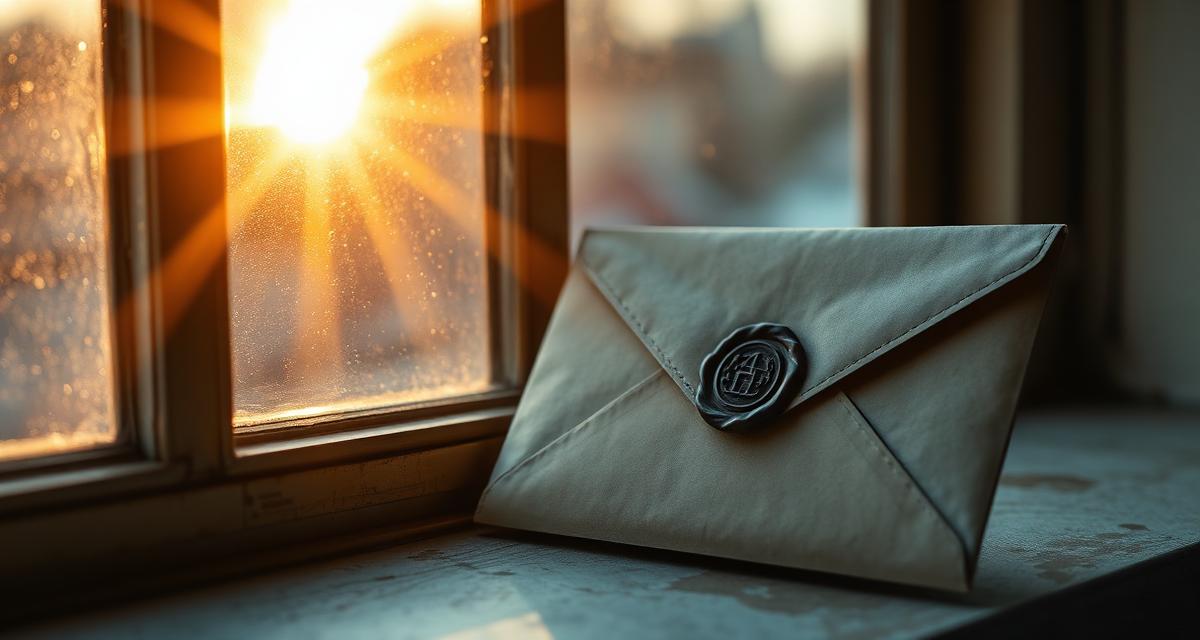
What does it feel like to open a letter from your past self?
The notification came on a Tuesday. Different Tuesday, different year, same person — mostly.
I was making dinner. Actual dinner — roasted vegetables, rice, the kind of meal that requires a cutting board and a functioning will to live. My phone buzzed. FutureNote. "A sealed letter is ready to open."
I sat down at the kitchen table. The table I'd bought myself. In the apartment with the silent heating. With Miso curling around my ankles.
And I read the words of a woman sitting on a floor.
The first sentence hit like a car accident. Not because it was dramatic — because it was small. She wrote about cereal for dinner. And I was standing in a kitchen that smelled like rosemary.
I cried. Not the silent leaking kind. The kind where sound comes out of you and you realize it's been living in your chest for a year, waiting for permission. I cried because the woman who wrote that letter was so certain she wouldn't make it. And I was standing in her future, holding proof that she did.
The spice rack line. God, the spice rack line.
She wrote: "I hope you moved the spice rack."
I had. It was in a closet in a different apartment in a different life. She couldn't have known that. She just hoped. And somehow, hoping was enough.
Why do sealed letters create more emotional impact than regular journaling?
This is the part where I stop crying and start thinking. Because what happened to me isn't magic — it's neuroscience combined with clever UX.
Regular journaling is a conversation with your present self. You write, you re-read, you edit, you perform. Even in private journals, you're unconsciously writing for the person you are right now. The feedback loop is immediate and small.
A sealed letter is a one-way transmission across time. You can't re-read it. You can't edit it. You can't soften the truth because you've already moved past it. The seal forces radical honesty — not because you're brave, but because you know nobody will read it for months or years, including you.
When you finally open it, your brain doesn't treat it as "remembering." It treats it as new information from a trusted source. The source is you — but a version of you your brain has partially forgotten. The result is a collision between empathy and recognition that regular memory can't produce.
You feel compassion for the person who wrote it. And then you realize: that person is you.
The FutureNote Perspective: A sealed letter isn't a diary entry. It's a message in a bottle thrown into the ocean of time. When it washes back to you, it doesn't just remind you where you were. It shows you how far you've swum.
How do you write a letter your future self will actually need?
After this experience, I've written 23 more sealed letters. Some for 30 days. Some for 6 months. Here's what I've learned about writing ones that land:
1. Write when you feel something, not when you think something. The letter that destroyed me wasn't philosophical. It was about cereal and a spice rack. Write the small, embarrassing, physical truths. Those are the ones that time amplifies.
2. Don't try to be wise. The worst sealed letters are the ones where you try to give your future self advice. You don't know what they'll need. Instead, just tell them what's true right now. "I ate cereal for dinner. The radiator is loud. I miss my mom's voice." That's enough. That's everything.
3. Include one hope. Not a goal. Not a resolution. A hope. Something fragile and honest. "I hope the bed doesn't feel empty." "I hope I stopped checking his Instagram." "I hope I can laugh at this someday." When your future self reads that hope and realizes it came true — that's the moment. That's the whole point.
4. Seal it for at least 30 days. Anything shorter and you're still too close. You haven't changed enough for the letter to matter. 30 days is the minimum threshold for the Temporal Emotional Paradox to activate. 365 days is where it becomes transcendent.
Write the letter you'd want to find in your coat pocket next winter. Not the essay. Not the manifesto. The scribbled, desperate, beautiful truth.
Is there scientific evidence that letters to your future self actually help?
Yes — and the research has accelerated dramatically since 2024.
Narrative therapy and expressive writing. Dr. James Pennebaker's foundational research at the University of Texas showed that expressive writing — writing about emotional experiences for 15-20 minutes — significantly improves immune function, reduces doctor visits, and lowers cortisol levels. Sealed writing amplifies this effect because the seal removes the performance pressure of potential re-reading.
Future self-continuity. UCLA psychologist Hal Hershfield's research demonstrated that people who feel more connected to their future selves make better decisions across every domain — financial, health, relational. A sealed letter is the most direct bridge between present and future self that exists outside of a time machine.
The re-encounter effect. A 2025 longitudinal study found that participants who opened sealed personal writings after 6+ months showed measurably higher self-compassion scores and lower rumination than a control group. The researchers called this the "re-encounter effect" — the therapeutic benefit of meeting your past self with the distance only time can provide.
Start Your Own 365-Day Letter
I can't promise your letter will break you the way mine broke me. Maybe it'll make you laugh. Maybe it'll make you proud. Maybe it'll show you that the thing you're so worried about right now will dissolve into nothing.
But I can promise this: a year from now, you'll be a different person. And the only way to see the distance you've traveled is to drop a pin where you're standing right now.
The floor of your apartment. The cereal for dinner. The radiator that won't stop clanking. The hope — small and stubborn and irrational — that it gets better.
Write it down. Seal it. Let time do the rest.
Download FutureNote → and write your first sealed letter tonight. Choose 365 days. Be honest. Be small. Be raw. Your future self is already waiting.
FutureNote — because the version of you who survives this deserves to hear from the version of you who's living it. Available on iOS.
Ready to write to
your future self?
Download FutureNote and write your first sealed letter in under 3 minutes. Lock it. Forget it. Rediscover it.
Download on the App Store